Leave us a Google review

  The Peaslee Method

Seeing far,
then getting there.

Two movements. Six steps. Proof, not pitch.

Seeing Far

The line you can't
yet see.

01

Analyze

Read the land, the light, the program — and what the client cannot yet name.

02

Create

Draw the one idea that resolves them. Held clearly, carried whole.

03

Evaluate

Test it against the place. If it competes with the site, it goes.

Getting There

The line, built
as drawn.

04

Anticipate

Find the problem on paper, before it ever costs the building.

05

Coordinate

Hold builders, engineers, and town to a single intent.

06

Execute

Build it as drawn — quietly, on the ground, to the end.

The full arc

In practice the same hand carries the work the whole way — from project inception, feasibility, and site selection, through schematic design and construction documents, to bidding, full-time site representation, and construction administration. One intent, held from first sketch to final walk-through.

  FAQ

The conversation, both ways.

Seeing far, then getting there — the questions we ask you, and the questions worth asking us.

Seeing far

Getting there

Questions for you

1Is your budget & schedule clear, and how flexible are they?

1Yes, our budget is fairly clear with our limits, but we’re not sure how much time is required. Once the scope of work is determined, we’ll know how best to prepare.

2Who will benefit, and how?

2We want our place to provide meaningful growth with time, connections to the community, and with a reverence for nature.

3Which of these are most important: Time, Cost or Quality?

3Longevity, and the significance of creating a place with sustainable values, at reasonable expense.

Questions for the architect

1Are you the right architect for this project, and how?

1I believe and practice in theories of beauty, balancing the means of necessity, which will demonstrate elegant simplicity and, if possible, innovation.

2How will you prepare for this particular project?

2Experience helps me ask the right questions; imagination gives alternative solutions for the design problem’s unique conditions and goals … and then, strategizing for the best delivery.

3In your role as designer & coordinator, how will this project be of service to your architectural goals?

3Analyze the chances, create the choices, evaluate the changes — for becoming an elevated sense of place …

The line you can’t yet see.

The line, built as drawn.

  Vision, form & function

Tradition, integrity & skills.

The same intent, held whole — from the first line drawn, through the line built, to the line finally formed.

Lines drawn
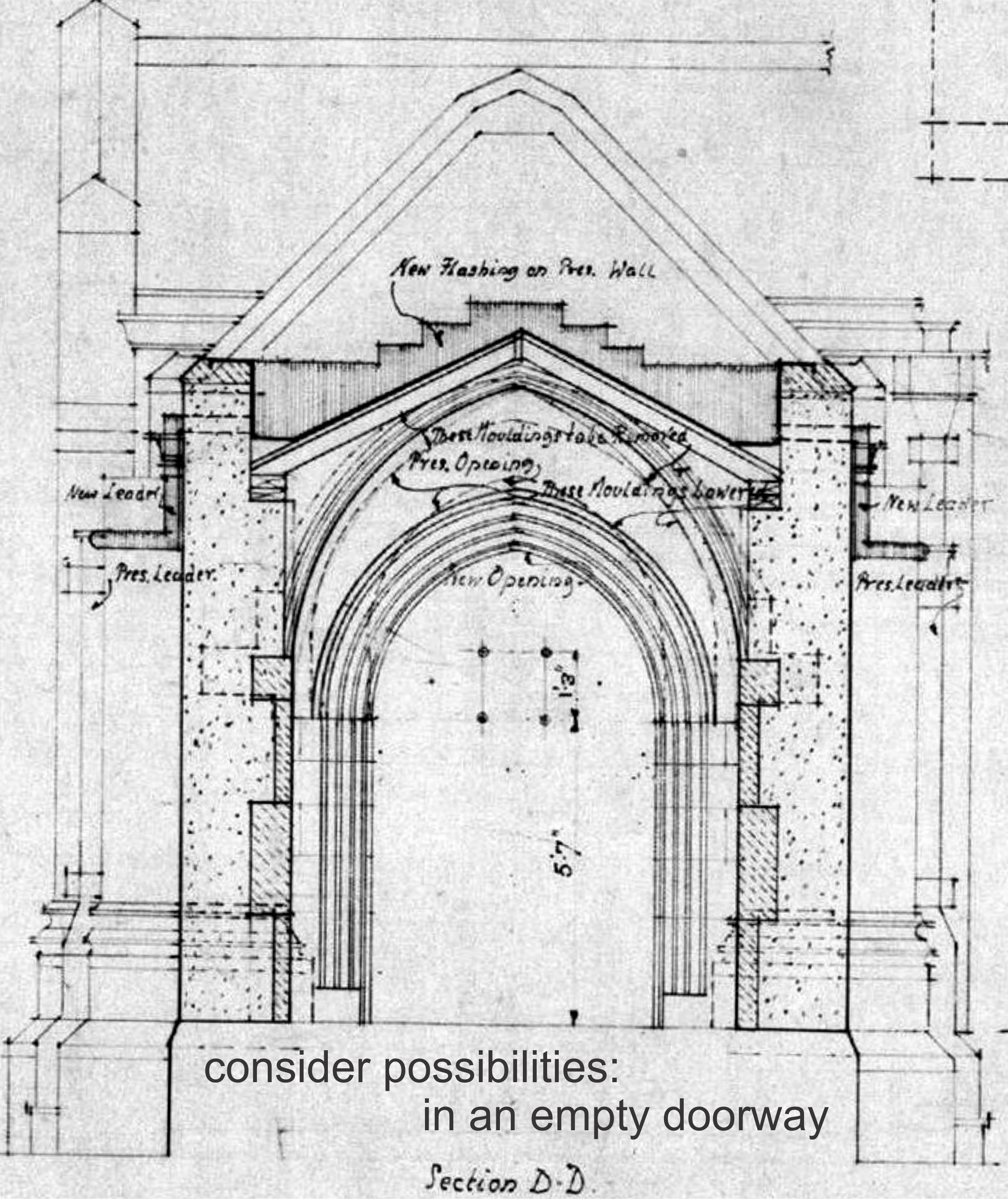
Hand-drafted section D-D of a Gothic doorway — 'consider possibilities: in an empty doorway.'
Working drawings

Lines built

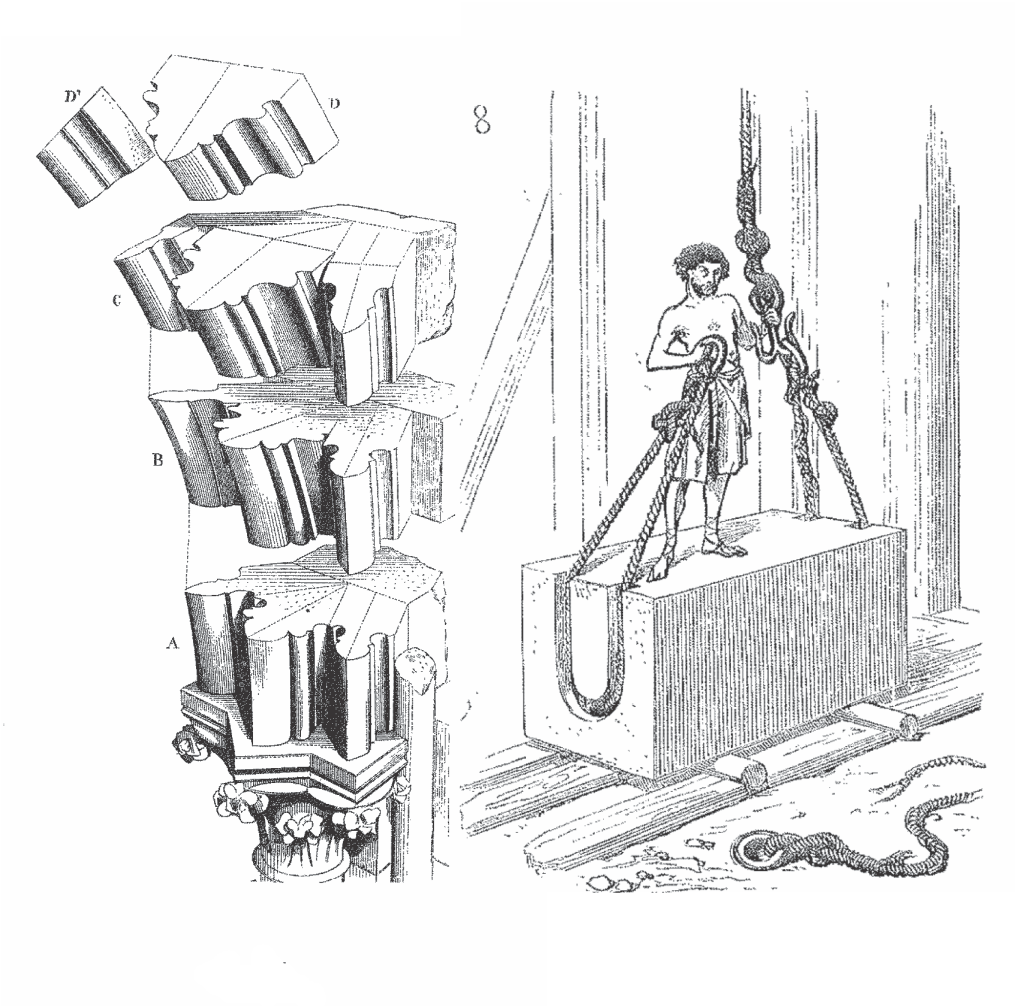
Engraving of a mason setting a dressed stone block, with moulding profiles of a clustered column.
Project management

Lines formed

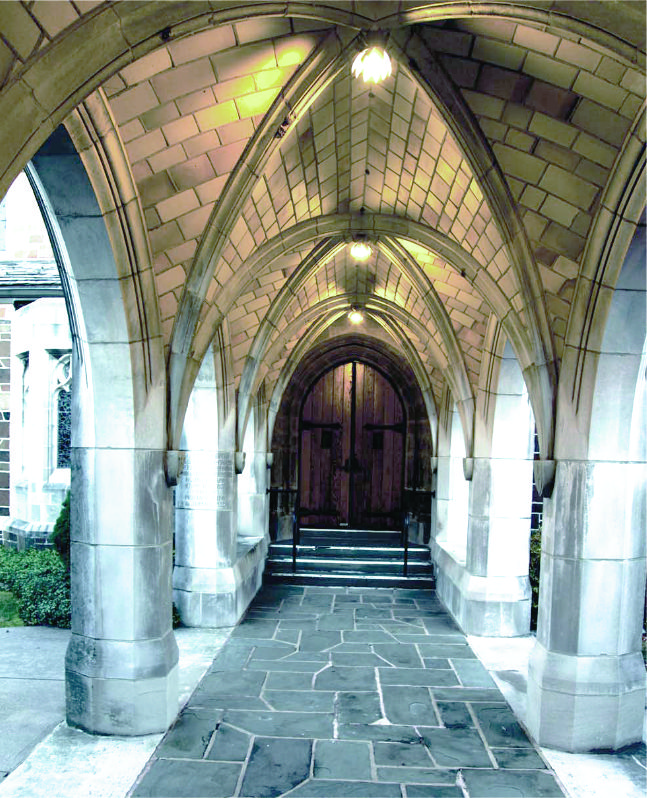
Finished ribbed-vault stone arcade leading to a timber door.
Substantial completion
Quality is never an accident; it is always the result of intelligent effort.
— John Ruskin

The process is visible in the work — not in a layer of words beside it.